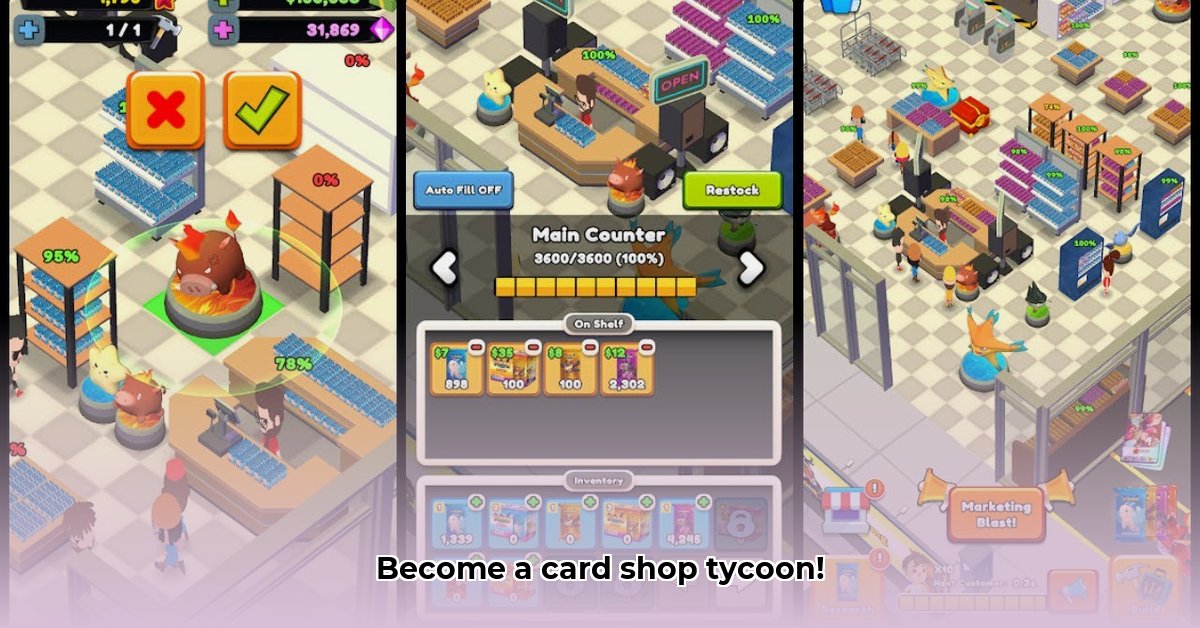
Ready to become a card shop mogul? TCG Card Shop Tycoon 2 lets you build your empire from the ground up, offering hours of satisfying gameplay focused on strategic decision-making and watching your profits soar. It's like owning your own digital comic book store, but with trading cards! Let's dive into the strategies that separate the casual player from the ultimate tycoon.
Getting to Know the Gameplay
TCG Card Shop Tycoon 2 is an idle simulation game, meaning you build and expand your business without constant active involvement. The core gameplay is surprisingly intuitive: buy cards, sell them for profit, and reinvest your earnings to upgrade your shop. But the strategic decisions are key. What cards do you prioritize? How do you balance your inventory? Do you focus on expansion or upgrades? These choices define your success. The game's cross-platform availability (Android and PC via BlueStacks) is a major advantage, broadening its reach.
Navigating the Competitive Landscape: A Market Analysis
The mobile gaming market is fiercely competitive. TCG Card Shop Tycoon 2 faces a tough challenge, but its accessibility and simple, addictive gameplay are major strengths. However, can it stand out in the crowd?
Here's a SWOT analysis:
| Strength | Weakness | Opportunity | Threat |
|---|---|---|---|
| Simple, addictive gameplay | Intense market competition | Expansion to new platforms | Negative player reviews |
| Cross-platform availability | Potential for monetization issues | Improved in-game community | Technical glitches and bugs |
| Easy to learn | Dependence on in-app purchases | Strategic partnerships | Shifting player preferences |
Isn't it crucial for developers to carefully consider these factors to ensure long-term success? The competitive landscape is constantly shifting, demanding adaptability and innovation.
Making Money: The Monetization Model
TCG Card Shop Tycoon 2 uses a free-to-play model, generating revenue through in-app purchases (IAPs). Players can buy card packs containing rare cards that accelerate progress, and they can purchase shop upgrades to increase efficiency and profits. Balancing IAPs is crucial; too many can alienate players, while too few might hinder development. It's a delicate dance.
Charting a Course to Success: Key Strategies
Success depends on smart strategies, for both developers and players.
For OPNeon Games (Developers):
- Short-Term: Aggressive marketing (social media, targeted ads), responsive community management, and rapid bug fixes.
- Long-Term: Major content updates (new cards, features, events), platform expansion (consoles, full PC version), and community building.
For Players:
- Short-Term: Explore gameplay, provide feedback, and engage with the community.
- Long-Term: Continue playing, offer suggestions, and support the game through positive reviews.
For Investors: Monitor Key Performance Indicators (KPIs) such as DAU/MAU, ARPU, and player retention to assess short-term performance. Evaluate long-term growth potential and ROI of marketing campaigns and game updates. How can investors accurately evaluate the return on investment in the game’s continued development?
The Risks Involved: Mitigating Potential Problems
Risk assessment is crucial. Here's a breakdown:
| Risk Category | Likelihood | Impact | Mitigation Strategy |
|---|---|---|---|
| Intense Market Competition | High | High | Unique gameplay, strong marketing, community building |
| Negative Player Reviews | Medium | Medium | Community management, quick updates, transparent communication |
| Issues with Monetization | Medium | Medium | A/B testing of IAPs, fair pricing |
| Unexpected Technical Glitches | Low | Medium | Thorough testing, rapid bug fixes, robust server infrastructure |
Addressing these risks proactively is key to ensuring the game's long-term health. How can developers effectively balance innovation with risk management?
How to Maximize Revenue in TCG Card Shop Tycoon 2
Let's explore specific strategies to dominate the in-game market.
Early Game: Pack Opening Frenzy
Focus on acquiring valuable cards to build your inventory. Automation mods can significantly speed up the process. Aim for levels 5-7 in the first day.
Pricing for Profit
A simple yet effective pricing strategy: add 10% to the Manufacturer's Suggested Retail Price (MSRP), then round up.
Leveling Up: The Fast Checkout Kid
Reaching level 25 unlocks the "Fast Checkout Kid" upgrade, dramatically boosting sales speed.
Mid-to-Late Game: Building Your Empire
Expand your warehouse to hold more cards and increase sales. Implement sophisticated inventory management.
Advanced Strategies: Mastering the Market
Track market trends, adjust pricing accordingly, and become a shrewd market analyst.
Actionable Steps for Success
- Prioritize Pack Opening: Utilize automation mods where possible.
- Strategic Pricing: Employ the MSRP +10% method.
- Staff Upgrades: Unlock the “Fast Checkout Kid” upgrade at level 25.
- Warehouse Expansion: Increase your storage capacity.
- Market Analysis: Continuously monitor market trends and adapt your strategy.
Risk Assessment
| Risk | Mitigation |
|---|---|
| Mod Dependence | Use reputable mods; back up save files frequently. |
| Market Fluctuations | Diversify inventory; track trends; adjust pricing. |
| Staff Inefficiency | Train staff; upgrade as you progress. |
| Incorrect Pricing | Monitor market prices; test & adjust dynamically. |
Conclusion
TCG Card Shop Tycoon 2 has the potential to become a significant player in the mobile gaming market. By addressing the risks and embracing the outlined strategies, both developers and players can achieve greater success. The future remains bright, and the journey to becoming a tycoon is just beginning!
⭐⭐⭐⭐☆ (4.8)
Download via Link 1
Download via Link 2
Last updated: Monday, May 12, 2025